
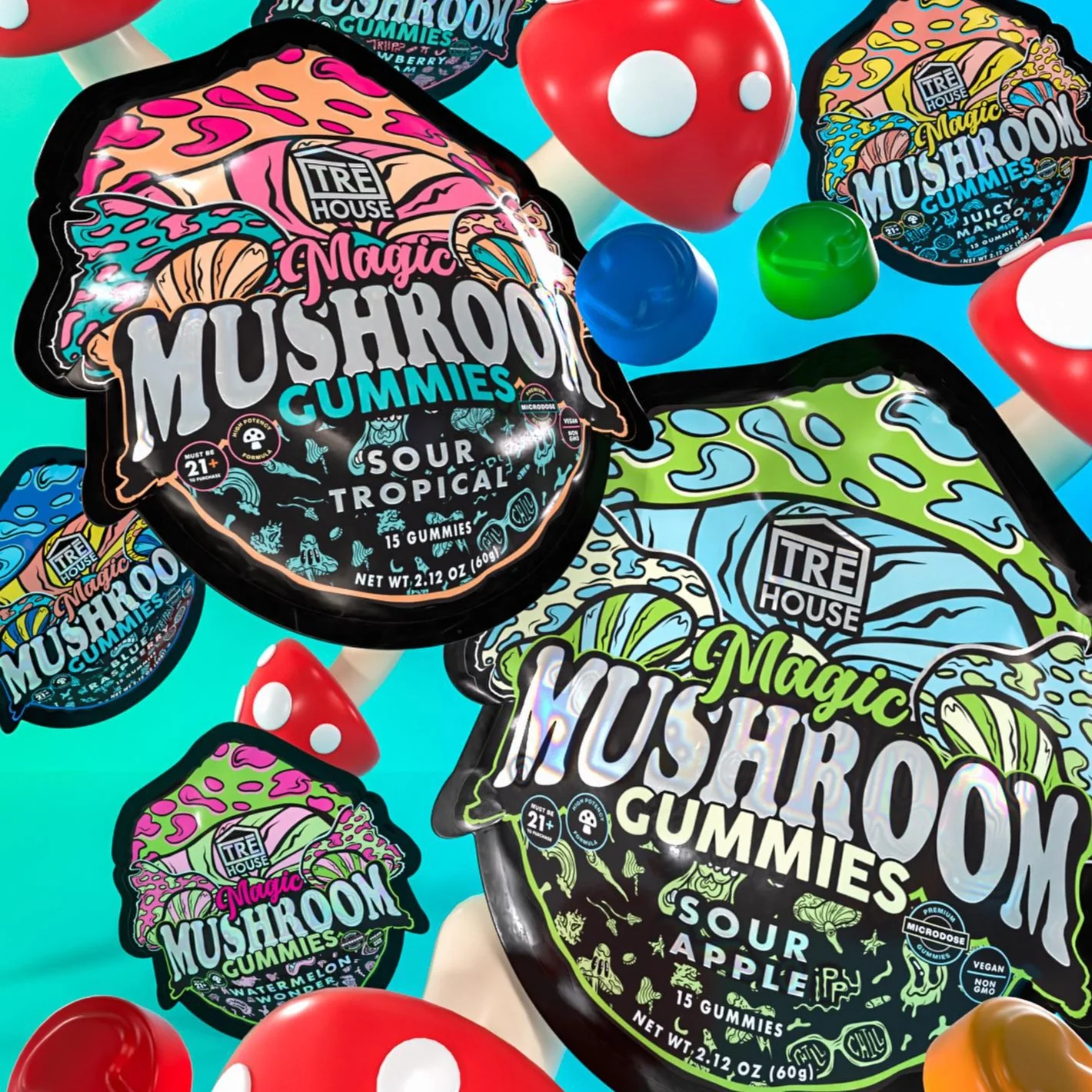
TRĒ House Magic Mushroom Gummies Review (2026): An Honest, In-Depth Take
TRĒ House has become one of the most searched names in the legal mushroom gummy space, and the reviews are all over the map, which is exactly why an honest, detailed look is worth your time. Some people swear these gummies deliver a smooth, creative lift; others say they felt nothing at all. Both can be true, and understanding why is the key to deciding whether they’re right for you. This review breaks down what’s actually inside, what the experience is really like, the legitimate criticisms, how to dose them, and where to buy a lab-tested batch. No hype, no fake five-star gushing.
First, the framing that trips up a lot of buyers. Despite the “magic mushroom” name, TRĒ House gummies do not contain psilocybin, and they don’t contain Amanita muscaria either. They’re their own thing, which is both their selling point and the source of much of the confusion in the reviews.
What TRĒ House Magic Mushroom Gummies actually are
TRĒ House Magic Mushroom Gummies are marketed as legal, fruit-flavored gummies built around a single headline ingredient: Neurotonin, the brand’s trademarked proprietary active compound blend. Rather than using a psychedelic mushroom, the brand combines nootropics, adaptogens, and what it calls pre-blended tryptamines into a stack designed to mimic a classic mushroom feel through legal means.
Based on the brand’s disclosures, the Neurotonin blend draws on ingredients like 5-HTP (a serotonin precursor), Rhodiola Rosea, lion’s mane, mimosa hostilis root, phenylethylamine (PEA) HCl, and vitamins B12 and D3, delivered in a liposomal system meant to improve absorption. Alongside that, the gummies carry a supporting stack of functional mushrooms: lion’s mane, turkey tail, cordyceps, and chaga, which add cognitive, immune, and antioxidant support rather than any high. The base is a standard vegan gummy of tapioca syrup, cane sugar, pectin, sodium citrate, and natural flavors and colors.
Crucially, the brand is explicit about what’s not in them: no psilocybin, no psilocin, no 4-AcO-DMT or related compounds, no Amanita muscaria, and no THC, CBD, or any cannabinoids. However, in December 2025 California Department of Public Health testing found 4-AcO-DET and 4-AcO-DMT, illegal psilocin analogues, in several TRĒ House products, including three gummy flavors, contradicting the brand’s own lab reports. Treat the “fully legal” framing with caution. The lineup also comes in an Extra Strength version that runs about 50% stronger than the original formula, with 10 gummies per bag instead of 15.
Here’s a closer look at the product before we get into how it performs:
Breaking down the Neurotonin blend
Since the entire experience hinges on Neurotonin, it’s worth understanding what each part is doing, because this is where TRĒ House’s approach genuinely differs from a straight Amanita or psilocybin product. Rather than one psychoactive compound, it’s a stack engineered to nudge several systems at once.
- 5-HTP (5-hydroxytryptophan): a direct precursor your body uses to make serotonin. The idea is to gently support mood and a sense of wellbeing. It’s also the ingredient that creates the most important safety caveat, since it shouldn’t be combined with serotonin-affecting medications.
- Phenylethylamine (PEA) HCl: a compound associated with a short-lived mood and energy lift, sometimes described as the “feel-good” molecule the brain releases during pleasant moments. It’s part of why some users report an uplifting, sociable feel.
- Rhodiola Rosea: an adaptogen traditionally used to support stress resilience and reduce fatigue, rounding out the energetic side of the profile.
- Mimosa hostilis root: a plant the brand includes as part of its tryptamine-oriented blend, contributing to the “cerebral” character users describe. Mimosa hostilis root bark is a known natural source of DMT, a Schedule I controlled substance in the US, and the brand does not disclose how the ingredient is processed.
- Lion’s mane, turkey tail, cordyceps, and chaga: the functional mushroom stack. None of these is psychoactive; they’re there for cognitive support, energy, immune function, and antioxidants, which is what lets the brand call it a genuine mushroom product even without Amanita or psilocybin.
- Vitamins B12 and D3, in a liposomal system: B12 and D3 add an energy and wellness angle, while the liposomal delivery is meant to improve how well the actives absorb.
The honest read on this blend is that it’s thoughtfully composed and clearly aimed at an uplifting, functional, daytime-friendly feel rather than a heavy psychedelic one. The catch, again, is that the brand discloses the ingredients but not the milligram amount of each in the proprietary blend, so you can see what’s in it without knowing how much. That’s the recurring theme of this whole review.
Flavors and format
One area where TRĒ House consistently earns praise is taste, which matters more than it sounds when the alternative is choking down something earthy. The gummies come in a wide fruit-forward range that has included Blue Raspberry, Watermelon Wonder, Juicy Mango, Strawberry Dream, Sour Apple, Sour Cherry, Sour Grape, and Sour Tropical. Reviewers note that the sour varieties in particular pair well with the onset, since the tart flavor gives a clean palate rather than a heavy sugary coating, which helps for multi-gummy sessions. The gummies are vegan, made with pectin instead of gelatin, and come in compact, resealable, travel-friendly pouches. The original formula runs 15 gummies per bag; the Extra Strength runs 10 at roughly 50% higher potency each.
The experience: what users actually report
This is where the reviews get genuinely interesting, because the feedback splits in a way that’s worth understanding rather than glossing over.
The positive camp describes a pleasant, uplifting, mildly cerebral experience: mood elevation, a creative or social lift, body relaxation, and at higher doses some gentle shifts in perception. Reviewers in this group often compare the feel to a light, manageable version of a classic mushroom vibe, energetic and happy rather than heavy. Many specifically praise the taste, since the fruit-forward and sour flavors mask the herbal notes well, making them easy to eat. The Extra Strength versions get credit for a fuller effect with fewer gummies.
So what explains the split? Two things. First, because the active is a proprietary nootropic and tryptamine blend rather than a single measured compound like muscimol, individual response varies a lot based on body chemistry and sensitivity. Second, the per-gummy potency of the active blend isn’t publicly disclosed in milligrams, so “one gummy” means different things to different people’s expectations. The honest takeaway: go in expecting a light, variable, mood-and-creativity nudge rather than a guaranteed strong experience, and be prepared that you may need to find your own dose.
The honest pros and cons
Pulling the reviews together, here’s the balanced scorecard.
What’s genuinely good: the gummies are marketed as psilocybin-free and cannabinoid-free, come with brand-published lab reports (which California testing has contradicted), vegan, and they taste good, which is not a given in this category. For someone who wants a gentle, legal, daytime-friendly lift with a low ceiling, that profile is appealing, and the functional mushroom stack adds a wellness angle.
What holds them back: the proprietary blend means the exact dose of the active isn’t disclosed, which makes the experience hard to predict and is the single most common thread in critical reviews. Effects are inconsistent person to person, the value can feel thin if you’re someone who needs several gummies to feel anything, and the brand doesn’t ship to a number of states, so check its current shipping list. None of this makes them a bad product, but it does mean they suit some buyers far better than others.
How TRĒ House compares to Amanita gummies
This comparison matters because shoppers often cross-shop these two categories without realizing how different they are. TRĒ House uses a nootropic and tryptamine blend (Neurotonin) with no Amanita. Many other popular “magic mushroom gummies” instead use Amanita muscaria, whose active compound muscimol produces a dreamier, more sedating, body-forward effect. Neither is psilocybin, but they feel different and they’re labeled differently.
The practical distinction for buyers is transparency. The most clearly labeled Amanita products state their muscimol or active-compound content per gummy, which lets you dial in a dose. TRĒ House’s proprietary blend doesn’t, which is why the experience can feel like more of a guessing game. If predictability is your priority, an Amanita gummy with disclosed dosing may serve you better; if you specifically want a legal, cannabinoid-free, nootropic-style lift and don’t mind some variability, TRĒ House fits.
| Factor | TRĒ House (Neurotonin) | Amanita gummies |
|---|---|---|
| Active | Nootropic + tryptamine blend | Muscimol from Amanita |
| Feel | Uplifting, cerebral, lighter | Dreamy, sedating, body-forward |
| Dose disclosed? | No (proprietary) | Often yes (clearer brands) |
| Cannabinoids | None | Varies by brand |
| Best for | Legal cerebral lift | Predictable dreamy calm |
If you land on the Amanita side of that table, deVINE stocks several clearly labeled options worth comparing, which we’ll cover in a moment.
Are TRĒ House gummies safe and legal?
TRĒ House markets its gummies as free of psilocybin, Amanita, and cannabinoids and sells them to adults 21 and up, but their legal position is not clean. In December 2025 the California Department of Public Health warned consumers not to eat several TRĒ House gummies, chocolate bars, and syrups after its testing found 4-AcO-DET and 4-AcO-DMT, psilocin analogues it described as illegal Schedule I drugs, and said the products may cause severe illness. The brand also restricts shipping to certain states. The brand publishes lab reports, which is the baseline you should expect from anything in this space.
On safety, a few honest notes. The blend includes 5-HTP and other serotonin-active ingredients, so anyone taking SSRIs, MAOIs, or other serotonin-affecting medications should be cautious and talk to a clinician first, since combining serotonergic substances carries real risk. These aren’t for anyone pregnant or nursing, and because effects can include perception changes and relaxation, you shouldn’t drive or operate machinery after taking them. As with the whole category, the FDA has not evaluated these for treating anything, so treat them as a recreational wellness product, not a remedy.
One safety lesson from the wider category
This applies directly to TRĒ House, as the California findings above show, and it’s the most useful context for anyone shopping legal mushroom gummies, and it explains why buying from a lab-transparent seller matters so much. The mushroom-edible category as a whole has had real labeling problems. In a 2024 report, federal health investigators found that some mushroom “nootropic” gummies on the market contained undisclosed substances that weren’t on the label, and in other cases the active compounds a label claimed weren’t actually detected. Separately, regulators have flagged that the legal mushroom space is lightly policed, so quality varies widely between brands.
A current third-party lab report is your single best protection, but it has limits. TRE House does publish lab reports, yet California’s December 2025 testing contradicted them, which shows why independent verification matters. Buying through an accountable shop such as deVINE Boston, which publishes lab reports and stands behind what it sells, adds another layer of protection versus grabbing a mystery product from an anonymous seller.
How to dose TRĒ House Magic Mushroom Gummies
- Our honest advice: don’t use the flagged products. California’s health department told consumers not to eat the Watermelon Wonder, Sour Tropical and Strawberry Dream gummies, along with several chocolate bars and a syrup, regardless of lot number. If you have any at home, don’t eat them.
- Don’t treat the label as a guarantee. TRE House’s own published lab reports said no psilocin or psilocybin was detected, yet the state’s testing found psilocin analogues. A brand’s lab report is only as reliable as the lab and the batch it covers.
- Never “find your dose” by escalating. With an undisclosed blend and contents in question, taking more to chase an effect is exactly the wrong move.
- Pair with the right setting. A calm, familiar environment suits the uplifting, cerebral effect best.
- Don’t stack with THC. The brand itself advises against combining these with THC products, so keep them separate.
- Skip if it’s not for you. Avoid entirely if pregnant, nursing, on serotonin-affecting medication, or before driving.
Who TRĒ House gummies are, and aren’t, for
Pulling this together, the honest answer has changed since these gummies first became popular. Before December 2025, TRE House looked like a polished, cannabinoid-free option with a gentle, uplifting reputation and inconsistent effects. After California’s testing found illegal psilocin analogues in several flavors and ordered the products off the market there, we can’t recommend them to anyone.
If you want a mushroom-style gummy, choose a product with a stated amount per gummy and a batch lab report from an accountable seller, and avoid any product marketed with unnamed “tryptamines.” If you take serotonin-affecting medication, are pregnant or nursing, or need to drive, skip this category entirely.
Where to buy TRĒ House gummies (and clearer-dosed alternatives)
As with anything you put in your body, the seller matters as much as the brand. Buying from an accountable shop that publishes lab reports and can answer questions beats an anonymous listing.
deVINE Boston no longer lists TRE House gummies. As a South Boston wellness shop open since late 2019, it publishes third-party lab reports for the products it stocks, so you can see what you’re buying.
For a gummy with a stated amount per piece, the Rize Megadose Gummies carry 500mg of a proprietary blend per gummy, 15 per pouch, $45 in October 2026, and Rize states they’re made without psilocybin. For a non-psychoactive option, Magic Trip’s functional gummies use lion’s mane, reishi and cordyceps. Browse the full legal mushroom collection to compare formats. The shop is at 619 E Broadway, open 10 AM to 10 PM daily (phone (617) 315-7636); online orders ship where legal, with free shipping over $65. It’s 21+ only.
Visit deVINE Boston
If you’d rather compare mushroom gummies in person and see the lab reports, deVINE is at 619 E Broadway in South Boston, open 10 AM to 10 PM seven days a week.
What to Do If You Have TRE House Gummies at Home
If you have any of the flavors named in California’s warning, don’t eat them, and keep them away from children and pets. If you or anyone else feels unwell after eating one, contact a health care provider or call Poison Control at 1-800-222-1222.
Frequently asked questions
Do TRĒ House Magic Mushroom Gummies contain psilocybin?
Not according to the label. TRĒ House states its gummies contain no psilocybin, psilocin, 4-AcO-DMT, Amanita muscaria, THC, CBD, or any cannabinoids. The active is Neurotonin, a proprietary blend of nootropics, adaptogens, and tryptamines designed to mimic a classic mushroom feel through legal ingredients. However, December 2025 testing by the California Department of Public Health found the psilocin analogues 4-AcO-DET and 4-AcO-DMT in several TRĒ House gummy flavors.
What do TRĒ House mushroom gummies feel like?
Users commonly describe an uplifting, mildly cerebral, creative, and relaxing experience, lighter than a classic trip. Effects vary widely between people, though: some report a pleasant lift, while others feel little even after several gummies, partly because the per-gummy dose isn’t publicly disclosed.
How many TRĒ House gummies should I take?
We don’t recommend taking them. California’s health department warned consumers not to eat several TRE House gummy flavors after finding illegal psilocin analogues, and the warning applies regardless of lot number.
Are TRĒ House gummies legal?
They’re sold as legal, psilocybin-free, cannabinoid-free products to adults 21 and up, though the brand restricts shipping to certain states, so confirm availability where you live. As with the whole category, the FDA has not evaluated them for treating any condition. Note that in December 2025 California health officials warned consumers not to eat several TRĒ House products after finding illegal psilocin analogues, so their legal status is in serious doubt.
How do TRĒ House gummies compare to Amanita gummies?
TRE House’s blend works through nootropics and other ingredients for an uplifting, cerebral feel, while Amanita gummies use muscimol for a dreamier, more sedating effect. Clearly labeled Amanita products often disclose their muscimol content, but the FDA said in December 2024 that Amanita is not authorized as a food ingredient, so neither category is a risk-free alternative.
Where can I buy TRĒ House gummies lab-tested?
deVINE Boston no longer lists TRE House gummies. As a South Boston wellness shop open since late 2019, it publishes third-party lab reports for the products it stocks, so you can see what you’re buying.
Disclaimer: This article is for informational and research purposes only and is not medical or legal advice. Products discussed are intended for adults 21 and older and are sold as psilocybin-free. Legal status and shipping availability vary by state and locality; verify the rules where you live before purchasing. These statements have not been evaluated by the FDA, and these products are not intended to diagnose, treat, cure, or prevent any disease. Ingredients including 5-HTP may interact with serotonin-affecting medications; consult a licensed medical practitioner before use if you take medication or have a medical condition, and do not use if pregnant or nursing. Do not drive or operate machinery after use. Keep out of reach of children and pets.

Dwight Moore
More articles by this author